
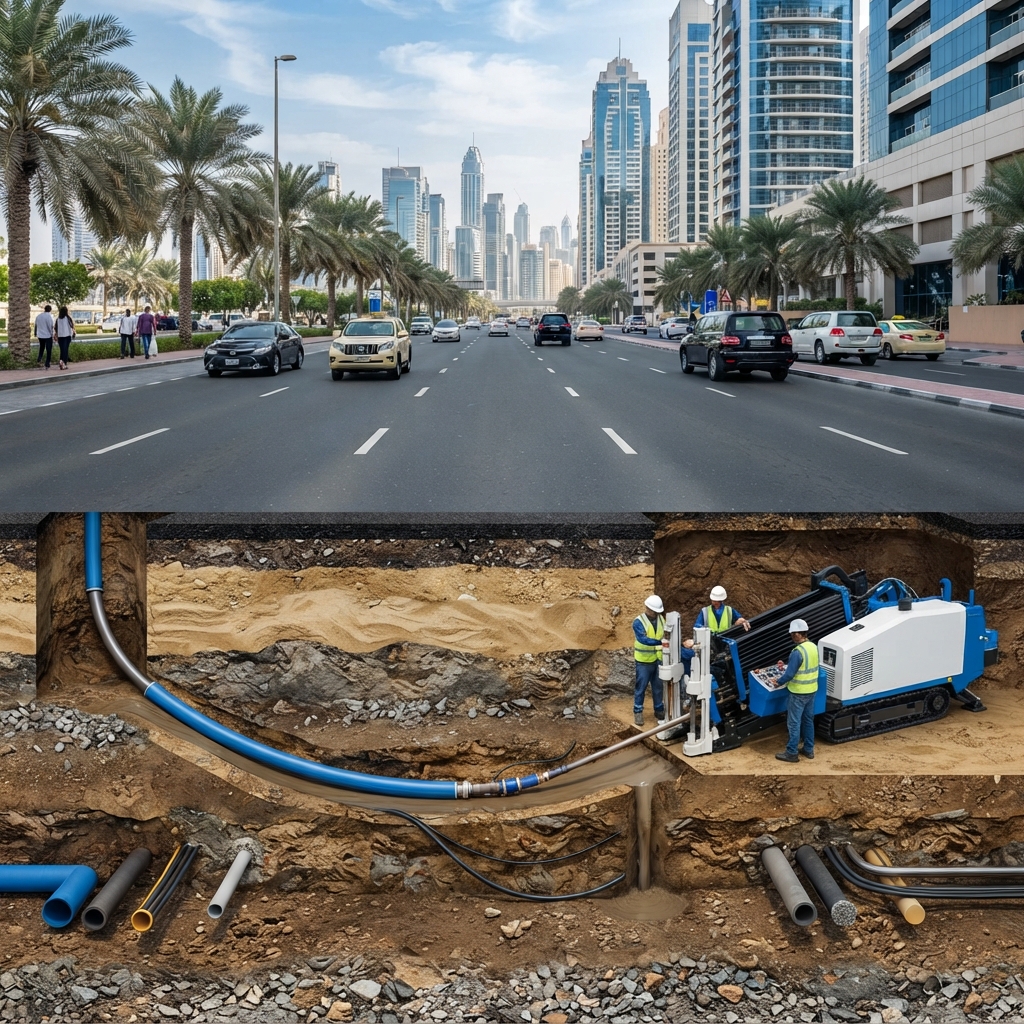
Putting in services underground sounds easy until the path goes under a busy road, highway, landscaped area, or built-up area.
Digging up everything can make traffic worse, damage nearby areas, and take a lot of work to fix up.
A smarter way to deal with these problems is to use Horizontal Directional Drilling (HDD).
Horizontal Directional Drilling (HDD) is a trenchless method that lets pipes, cables, and conduits be put underground with little damage to the surface.
What is an HDD?
Horizontal Directional Drilling, or HDD, is a way to put in underground services without having to dig a long trench across the ground.
A controlled path is made underground by a special kind of drilling machine. The needed pipe, cable, or conduit is pulled into place once the way is clear.
To compare, it’s like digging a path through the ground instead of the whole surface.
Because of this, HDD is great for projects that need to keep roads, access areas, and other areas around the project open.
Why is HDD useful?
There are problems with every building project. In busy places, even small amounts of digging can affect people walking, businesses, traffic, and the infrastructure that is already there.
HDD makes these problems easier to deal with.
Make roads easier to access
HDD can help cut down on the amount of digging that needs to be done across a road or highway when utilities need to go under it.
Minimize disturbances on the surface
Since most of the drilling is done underground, the surface isn’t affected as much as it is with projects that need to dig up a lot of ground.
Lessen the work of restoration.
It may take less work to fix up roads, pavements, landscaping, and other areas when there is less surface excavation.
Use the infrastructure that is already there.
A lot of utilities and buildings are already underground in cities. With careful HDD planning, you can find a way to get around these problems.
Help Project Delivery Go Quickly
With the right planning, tools, and skilled workers, HDD can be a good way to complete underground utility projects quickly and easily.
Where Can You Use An HDD?
HDDs can be used for a lot of different building tasks.
Irrigation and water
Put in underground pipes for water and irrigation while causing as little damage as possible to the area.
Cellular phones
Make tunnels for telecom cables and conduits, especially under roads and in built-up areas.
Wiring for electricity
Along the planned routes, put in underground electrical conduits and other utility equipment that goes with them.
Crossings of roads
HDD is very helpful when a pipe, cable, or conduit needs to go under a busy highway or road.
Buildings in cities
In built-up areas, HDD can help keep traffic, pedestrians, businesses, and current facilities running smoothly.
How does an HDD work?
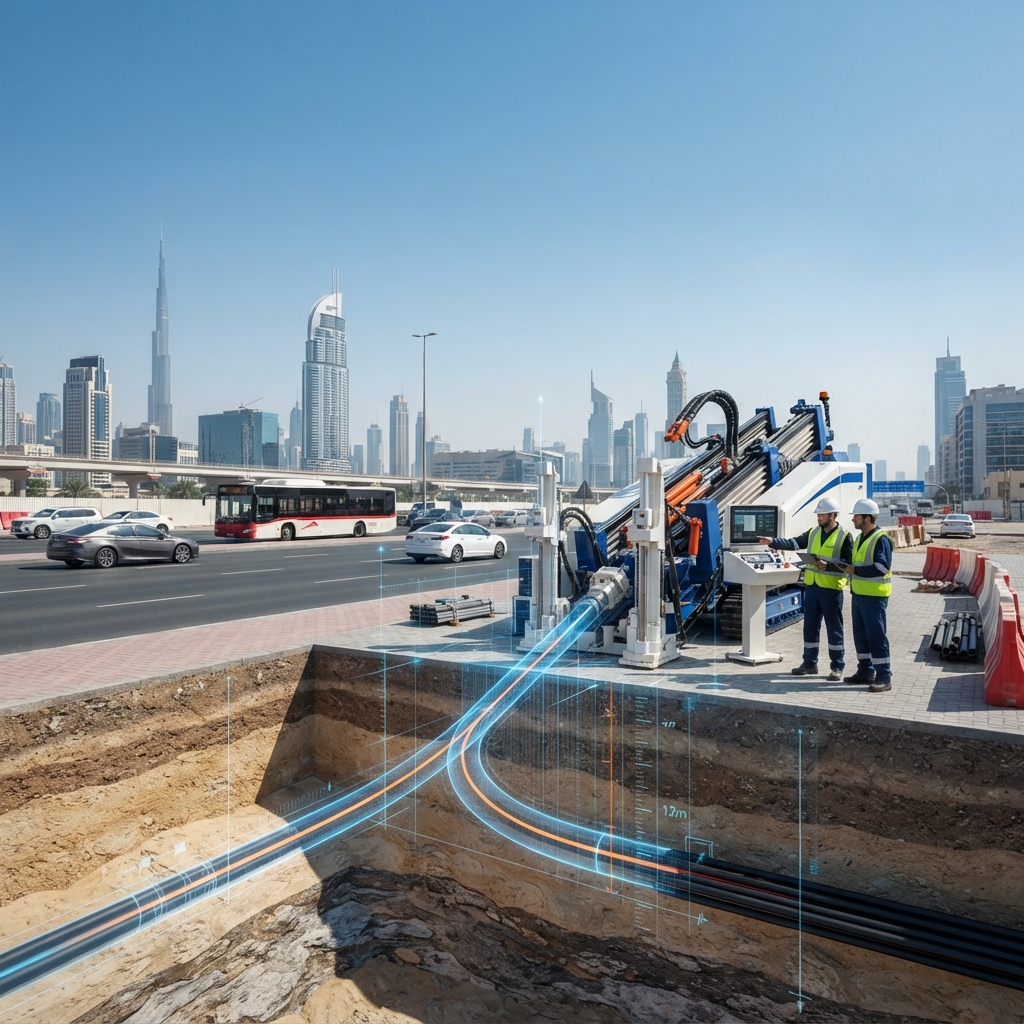
How does an HDD work?
Even though the technology is modern, the process is easy to understand.
1. Make a road map
The team looks at the spot and figures out the best way to install the service underground.
2. See what’s below ground
Before drilling starts, existing utilities and the condition of the ground are checked.
3. Cut a hole for the pilot.
Along the planned tunnel path, a small hole is drilled.
4. Make the hole bigger
The hole is slowly made bigger until it’s the right size for the job.
5. Put the utility in place
The needed pipe, cable, or conduit is pulled through the path that has been dug out underground.
6. Finish the site
The installation is checked, and the work area is finished and put back together the way it was.
What Does an HDD Project Need to Go Well?
The drill is only a part of the job.
It makes a difference to plan well.
Before they start working, the project team needs to know about the site, what’s below ground, and the best way to install the equipment.
Important things to think about are:
Underground services already in place
- How the ground is
- Depth of installation
- Size of the pipe or duct
- How far you drill
- Places to enter and leave
- Access to site
- Concerns about safety
- Plan for the project
When these details are properly thought through, problems that might happen can be found before the drilling begins.
HDD and the developing infrastructure in the UAE
The UAE is always building new roads, neighbourhoods, business areas, utility networks, and big infrastructure projects.
It can get harder to put in new underground utilities as cities get busier and more built up.
There could be roads, houses, landscaping, phone networks, power grids, and other services already set up.
HDD and other trenchless solutions can really help in this case.
HDD lets important structures be put in place below the ground without having to mess up anything above it.
How to Pick the Best HDD Team
To make an HDD job work, you need to plan it well and hire the right people.
An experienced HDD contractor should know the site well, be able to spot possible problems, choose the right tools, and carefully oversee the drilling and installation process.
Every step is important, from the first evaluation to the final placement of utilities.
That’s why it’s important to pick a contractor with the right safety approach, experience, tools, and technical knowledge.
Expert Help with HDDs and NDRCs in the UAE
Horizontal Directional Drilling (HDD/NDRC) services are offered by FGC Contracting LLC for underground infrastructure projects all over the UAE.
Our services work with programs like:
Telecommunications | Electrical Utilities | Underground Infrastructure | Road Crossings | Water and Irrigation
We focus on practical, well-thought-out solutions that help our clients put in underground services with as little damage to the surface as possible.
Need to Dig Underground for a Project?
HDD may be the best way to go underground for your project, whether you need to cross a busy road, set up a new utility network, or work in an established area.
Contact FGC Contracting LLC about what you need for HDD/NDRC.
